AdminBlackAfrica

The rise of Global Africa: Africa and the Caribbean forge new economic partnership

The decision to hold the 31st annual meeting of the African Export-Import Bank (Afreximbank) in Nassau, capital of the Bahamas, reflects the Caribbean nation’s ambition to become a bridge between Africa and its diaspora. The event featured African and Caribbean leaders, senior government officials, policymakers, bankers, business leaders and academics, as well as cultural icons such as actor Viola Davis, singer Wyclef Jean, and actor Boris Kodjoe. Leaders explored the concept of “Global Africa”, an idea gaining traction across the continent and beyond. It envisions African nations and their diaspora as a united front, working together for shared economic prosperity. A prosperous and competitive Global Africa Benedict Oramah, president and chairman of the board of directors at Afreximbank, highlighted the promise of a prosperous and competitive Global Africa as motivation for the bank’s venture into the Caribbean. The African Union (AU) recognises the diaspora as the “sixth region” of the continent. Member states of the Caribbean Community and Common Market (CARICOM) have joined Afreximbank as participating member states, and the bank has opened a regional office in Barbados. By April, 11 out of 15 CARICOM member states had signed the bank’s participation agreement. The bank’s board has approved a limit of $1.5bn to support participating CARICOM states – set to rise to $3bn when all sign. “I have always felt that when we trade with each other on the African continent, and with our brothers and sisters in the Caribbean, we are doing much more than business,” remarked Oramah. “We are, in fact, re-establishing our knowledge of each other, renewing bonds of history and solidarity which have been frayed by centuries of displacement, alienation and colonisation… “The over two billion Africans spread around the world must now recognise that together, they constitute a powerful economic force that cannot be ignored; they must also recognise that power can only be potent and credible if delivered on a common and cohesive platform.” Philip Davis, prime minister of the Bahamas, echoed this and stressed the need for Africa and the Caribbean to unite in the push to reform the global financial architecture. “We must embody the spirit of vigilance and an unbending principle, not only driven by economic interests but by the profound ethical imperative to advocate for a more inclusive and thorough global financial system.” Monique Nsanzabaganwa, deputy chairperson of the AU Commission, pledged the AU’s continued support: it “is prioritising the reform of the international financial architecture, debt restructuring, food security, energy transitions, and improving Africa’s credit rating. Our interests align strongly with those of the Caribbean in these areas.” African capital ownership is vital Oramah highlighted the need for Africa to own its capital: “for many decades, the global capitalist economy, built on the sweat and blood of African slaves, has remained an unbearable burden on the shoulders of Africans; we are now poised to make it work for us. It is capital, owned, controlled and deployed by us, and not by others, that has the best chance of turning the iniquities of that sad history into an asset for a new beginning of shared prosperity.” Financiers in Africa have responded to this by uniting under the banner of the Africa Club – a coalition of the continent’s most powerful finance houses that was launched in February at the 37th ordinary session of the AU. Formally named the Alliance of African Multilateral Financial Institutions (AAMFI), its founding members are Afreximbank, the Africa Finance Corporation (AFC), Trade and Development Bank Group (TDB Group), African Reinsurance Corporation (Africa Re), African Trade and Investment Development Insurance (ATIDI), Shelter Afrique Development Bank (ShafDB), and ZEP-RE (PTA Reinsurance). Its ranks are set to grow further. Kenya’s President William Ruto proposed, via a video link, that African central banks and governments dedicate 30% of their national reserves to African development. Olusegun Obasanjo, former president of Nigeria, said that “I learned from my father that what you can do for yourself, don’t outsource it to somebody else, because it will not be good enough. We have outsourced our development to others to do for us. The time has come for change.” Mahamadou Issoufou, former president of Niger, echoed this. “Africa must do away with this dependency syndrome, which gets us to think that the solutions to our problems are abroad.” He emphasised the need for Africa to trust itself and called for the strengthening of democratic institutions, contending that there is an undeniable link between peace and economic prosperity. Hailemariam Desalegn, former prime minister of Ethiopia, highlighted the importance of understanding Africa’s history: “Our civilisation, the global civilisation, began in Africa… We can bring about the African Renaissance if we understand our history.” Bold choices to accelerate integration The African Continental Free Trade Area (AfCFTA) holds immense promise in terms of rectifying this situation, said Wamkele Mene, secretary general of the AfCFTA secretariat. He revealed that the secretariat is working with ministers to develop common rules of origin for local content, “to foster industrial development in Africa”. But “it is easier to travel in the Caribbean and in Africa with a European passport, than it is with an African passport,” noted Arnold Ekpe, former group CEO of Ecobank and chairman of the Business Council for Africa. “That’s a problem. We can fix it. So why haven’t we fixed it?” Aliko Dangote, founder, chairman and CEO of Dangote Group, added: “as an investor, as someone who wants to make Africa great, I have to apply for 35 different visas on my passport.” In essence, African nations need to decide: build their own industries, or continue relying on imports, argued Samaila Zubairu, president and CEO of the Africa Finance Corporation (AFC). “‘We are focused on structural transformation of the continent. We are focused on moving from the export of raw materials to finished goods and semi-processed goods, on capturing and retaining value on the continent,” he said. Trade ties will advance African unity Pamela Coke-Hamilton, executive director of the International Trade Centre (ITC), highlighted trade between Africa and

The rise of Global Africa: Africa and the Caribbean forge new economic partnership Read More »

Navigating today’s debt restructuring landscape

The African continent was at the centre of the debt sustainability and restructuring debate even before the Covid-19 pandemic. Where a sovereign’s debt is complex and diverse, so too will be that debt’s restructuring. Recent African examples have highlighted this reality: countries’ creditors and debt arrangements may include a complex array of debts that are multilateral, Paris Club bilateral, non-Paris Club bilateral, syndicated, secured/resource-backed, unsecured, sharia-compliant, bonds (domestic and external) and yet others. Diverse creditor composition requires sovereigns not only to manage different creditors’ priorities and approaches to restructuring, but also to navigate an assortment of instruments, each with varying terms and conditions. Restructuring a complex debt portfolio would be challenging even if the sovereign were required only to address each debt individually, due to the sovereign facing imminent distress and the complexity of the underlying documents. But in a comprehensive sovereign debt restructuring, debt claims are not handled individually. In this scenario, where sovereign debt repayment capacity is limited, creditor coordination is required to appropriately allocate creditor gains and losses. Attempts at creditor coordination There have been attempts to address the perennial problem of creditor coordination in sovereign debt restructurings. Collective action clauses, for example, are ubiquitous in Eurobonds. They provide some relief by instituting voting mechanisms binding all holders to the terms agreed by a supermajority. More modern versions of these clauses allow issuers to aggregate different Eurobonds, facilitating a cross-instrument restructuring. These clauses still fall short, however, as they cannot be used across other types of claims (multilateral, bilateral or commercial loans). Additionally, while the G20’s Common Framework (CF) aimed to address creditor coordination issues in sovereign debt restructurings, it has been limited in its ability to resolve the difficulties inherent in aligning diverse creditor groups. Indeed, the CF excludes multilateral lending and requires that any deal reached with official bilateral creditors be imposed on commercial creditors on “comparable terms”. Defining what it means for each creditor group to provide debt relief on “comparable terms” has been central to these challenges. As a result, coordination under the CF has remained difficult, and much needed debt restructurings have experienced drastic delays. Beyond this, as recent examples have illustrated, the strategic interests of creditor countries can introduce an additional layer of complexity to African debt restructurings. A global pecking order Creditor classification and their corresponding rights complicate matters even further. There is a pecking order within the global financial architecture, with international financial institutions (IFIs) holding a de facto (rather than de jure) preferred-creditor status, which excludes such institutions from a restructuring. But which institutions qualify as an IFI? The lack of clarity on the response to this question has plagued many African sovereigns, with certain creditors using multilateral development bank status as justification for declining requests for debt restructurings. In an April 2024 policy paper, the International Monetary Fund (IMF) attempted to provide clarity on how different creditor classes would be treated for the purpose of its lending policies, a move aimed toward clearing up this uncertainty and speeding up restructurings. While it is important to understand the IMF’s position on various creditor categories, however, it remains to be seen whether, and to what extent, such clarity will help borrowers. Global discussions around how the international financial architecture can be improved to account for and respond to the above complexities are important. However, so too are conversations about what sovereign borrowers can do proactively to reduce the risk of encountering these challenges, a perspective that is often overlooked. Pre-emptively build resilience There are measures sovereign borrowers can take in advance to avoid unnecessary indebtedness, pre-emptively build their resiliency and bolster their responses to debt crises. These measures should start with adopting a robust legal, regulatory and institutional framework and improving debt management functions and capacities. A country’s legal, institutional and regulatory frameworks are collectively the bedrock upon which effective debt management, which includes crisis prevention and resolution, is built. Countries should ensure that they have clear frameworks that outline processes and procedures and appropriately allocate duties, responsibilities and oversight to ensure that the rules are followed. A framework with these characteristics will ensure the sovereign borrows within appropriate limits and can help to prevent a pick-and-mix approach to selecting financing sources. It also ensures that the borrower is fully aware of the challenges that may arise when dealing with certain creditors and credit structures. Further, roles and functions within debt management offices (DMOs) should be clearly defined to ensure accountability and efficiency in managing public debt. Debt management is a multifaceted job and requires a varied skillset and effective support systems. As such, comprehensive training should be provided to managers, and debt managements systems should be put in place to allow debt managers to effectively do their jobs. These measures should be informed by developed debt management strategies, borrowing plans to help guide decisions, and the employment of specialised tools for tasks such as debt recording and reporting. Crisis prevention also includes sovereigns being selective about the credit they incur, understanding the universe of their creditors, negotiating favourable terms and seeking ways to innovate to ensure sustainability and resiliency. To that end, sovereigns should be deliberate about the debt they take on. Although sovereign debt is a public good, not all debt is good debt. While a financing option might seem attractive in the short term, it remains crucial to understand the implications, both positive and negative, of such debt in the long term. Further, sovereigns must ensure they understand each credit’s terms, each creditor’s interests and, importantly, how the credit and the creditor might interact with each other from a debt management point of view and in the event a restructuring is required. It may also be appropriate to seek clarification from creditors on how they view their own classification as this may have a significant impact in a restructuring scenario. Such clarification should be obtained before the debt is incurred. The terms of a sovereign’s debt contracts should be fit for purpose, not overly burdensome

Navigating today’s debt restructuring landscape Read More »

Afreximbank And Uganda Development Bank Sign Project Preparation Financing Agreement

African Export-Import Bank (Afreximbank) (www.Afreximbank.com) and the Uganda Development Bank (UDB) have signed a Joint Project Preparation Facility Framework Agreement to provide early project preparatory financing and technical support services to public and private sector entities. This is aimed at boosting Uganda’s industrialization and export development activities.   Under the terms of the framework agreement, Afreximbank and UDB established a joint project preparation facility to unlock investments in priority sectors, such as, energy, transport and logistics, special economic zones/industrial parks, manufacturing, agro-processing, hospitality and tourism, mining, solid minerals and service sectors. The facility will assist in de-risking projects and rapidly advance their development from concept stage to bankability by covering the preparation of feasibility studies, project development and advisory services, and related costs. The two Banks aim to mobilize up to US$ 25 million in the form of project preparation funds for investments in Uganda. Mrs. Kanayo Awani, Executive Vice President, Intra-African Trade and Export Development Bank (Afreximbank), signed the agreement on behalf of Afreximbank while Mr. Samuel Edem Maitum, Director of Credit, UDB signed on behalf of his organisation on 14 June 2024 in Nassau, The Bahamas. Commenting on the execution of the agreement, Mrs. Awani stated: “The JPPF is a critical collaborative tool through which the Bank and its partners pool resources to prepare bankable projects, given that one of the major challenges in developing projects was moving commercially viable projects to financial close. “Through this partnership, Afreximbank intends to work alongside UDB to prepare quality, bankable projects to attract investments from both the public and private sector.” She added that the JPPF will be instrumental in catalysing and mobilizing downstream investments. Mr. Maitum noted that several transformative project ideas remain unimplemented in Uganda due to the limited availability of technical and financial support to ensure Bankability. He stated that UDB’s collaboration with Afreximbank through the Joint Project Preparation Facility “shall unlock several transformative private and public sector-led projects. The collaboration shall also enable the flow of capital to the jointly prepared projects.” He extended appreciation to Afreximbank for the collaboration opportunity and confirmed UDB’s commitment towards ensuring the success of the initiative. The implementation of the agreement is expected to help accelerate economic growth in Uganda through increased private sector investments in the targeted sectors and to help position Uganda as an attractive investment destination through the supply of a steady stream of investment ready projects. Source: Afreximbank

Afreximbank And Uganda Development Bank Sign Project Preparation Financing Agreement Read More »

Zambia Reopens Border with DRC After Resolution of Trade Dispute

Zambia has agreed to reopen its border with the Democratic Republic of the Congo (DRC) after a brief closure over the weekend due to a trade dispute. Zambia had closed the border after the DRC banned the import of soft drinks and beer from its southern neighbor. The decision threatened the DRC’s mineral exports, with a significant volume transported through Zambia to coastal shipping points. Unsurprisingly, it proved unpopular, sparking protests from Congolese truckers near the border town of Kasumbalesa and criticism from Zambian business groups. Following the backlash, Zambia’s Commerce, Trade, and Industry Minister Chipoka Mulenga traveled to the Congolese city of Lubumbashi, where he met with Congolese officials to resolve the issue. Source: DW

Zambia Reopens Border with DRC After Resolution of Trade Dispute Read More »

UN Leaders Advocate for Permanent Seat for Africa on Security Council

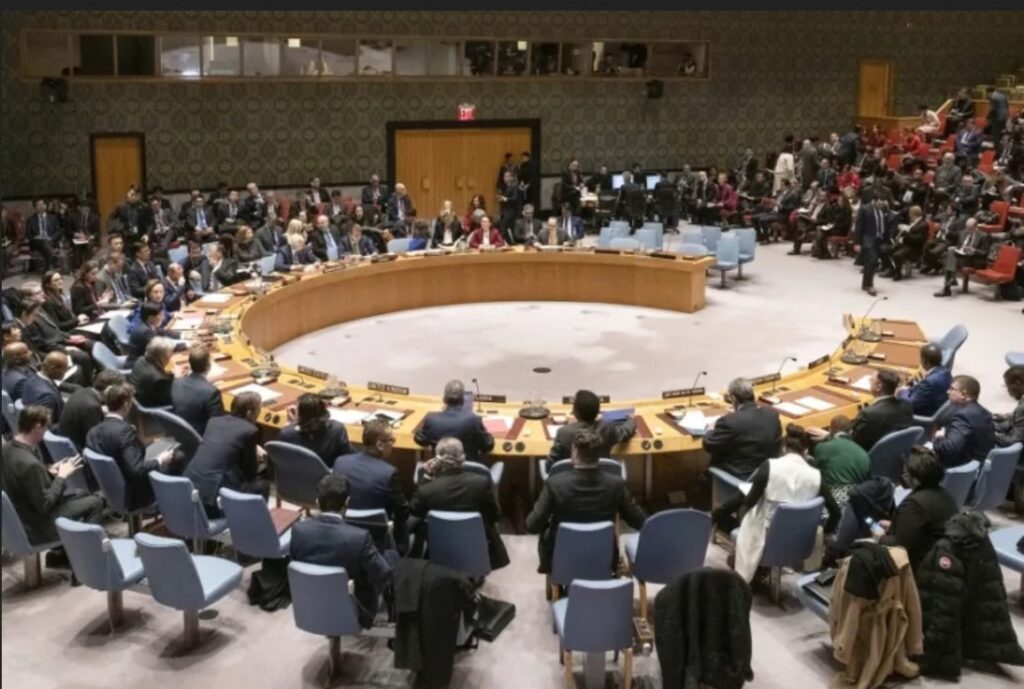
UN Secretary-General Antonio Guterres and other officials have called for a reform of the structure of the United Nations Security Council (UNSC) to grant Africa a permanent seat. During a high-level Security Council debate, Guterres emphasized that the UNSC’s current structure does not reflect today’s global realities, noting that Africa, with over a billion people, deserves a permanent voice on peace and security matters. Currently, the UNSC consists of five permanent members with veto power and 10 non-permanent seats, three of which are allocated to African states. Guterres’s call was echoed by the United Nations General Assembly President Dennis Francis and Sierra Leone’s President Julius Maada Bio. According to Francis, Africa’s lack of a permanent seat on the Security Council offends the principles of equity and inclusion. Bio, for his part, called for Africa to have two permanent and two additional non-permanent seats on the council. Source: AL JAZEERA

UN Leaders Advocate for Permanent Seat for Africa on Security Council Read More »

Kenya Dominate Africa on Olympics Medal Table, Finish 16th Place Overall

Kenya performed admirably at the 2024 Paris Olympics, securing a total of 11 medals, including four gold, two silver, and five bronze, which placed them as the top African nation and 16th overall in the medals table. Beatrice Chebet, Faith Kipyegon, and Emmanuel Wanyonyi contributed significantly to this success, with Chebet winning two gold medals in the 5,000m and 10,000m events, Kipyegon taking gold in the 1,500m and silver in the 5,000m, and Wanyonyi winning gold in the 800m. Other medalists included Ronald Kwemoi, who secured a silver in the 5,000m, and bronze medalists Faith Cherotich (3,000m steeplechase), Abraham Kibiwot (3,000m steeplechase), Mary Moraa (800m), Benson Kipruto (marathon), and Hellen Obiri (marathon). The USA topped the overall medal standings with 126 medals, followed by China and Japan. Kenya’s success was commended by Team Kenya Chef de Mission, Shadrack Maluki, who praised the athletes’ dedication and stressed the importance of embracing technology in future competitions to complement the country’s raw talent. “We have given it our all as a country. We need to thank our athletes for literally giving it all for their motherland,” Maluki, who is the Vice President of the National Olympic Committee of Kenya, said. Kenya Dominate Africa on Olympics Medal Table, Finish 16th Place Overall“It wasn’t an easy Olympics because what we saw was the application of technology by countries that embraced the same while we relied on raw talent. “It’s a high time we embraced technology and, going forward, the National Olympic Committee of Kenya, together with the government, will work together to ensure that whatever is needed to improve our sports is availed to our athletes. All in all, thank them for their commitment and dedication,” he added. Newly appointed Sports Cabinet Secretary Kipchumba Murkomen also celebrated Kenya’s achievements. Murkomen emphasised the significance of the national anthem being played on the global stage and the success of the Kenya House initiative, which promoted the country’s cultural, trade, and sports interests. “It has been a great experience for me. I’d like to congratulate Team Kenya for a successful show – we are the first in Africa and first in the athletics competition in the world,” “The national anthem being played was a great marketing platform for our country.” Looking ahead, Murkomen expressed the need for greater investment in the Kenya House concept for the 2028 Los Angeles Olympics, encouraging more private-sector participation, particularly from the Kenyan diaspora in the United States. Source: NEWS CENTRAL

Kenya Dominate Africa on Olympics Medal Table, Finish 16th Place Overall Read More »

Nigeria: Davido Launches Own Social Media App

Famous Afrobeats artist, Davido, has launched his own social media app named Chatter.The announcement was made in a widely shared post on his official X handle on Friday.Davido revealed that he co-owns the app with his close friend, Sir Banko.Chatter is described as a social audiovisual platform designed to connect content creators with a vibrant community, amplifying their voices.This marks Davido’s third venture into internet projects over the past eight months. Source: NEWS CENTRAL

Nigeria: Davido Launches Own Social Media App Read More »

Asake Features Wizkid, Travis Scott, Stormzy in Third Album ‘Lungu Boy’

Afrobeats sensation Asake is set to delight fans worldwide with his third studio album, Lungu Boy, scheduled for release this Friday. Asake-Lungu-Boy-Cover-News-Central-TVThe project features a star-studded lineup, including Nigerian superstar Wizkid, American hip-hop giant Travis Scott, British rappers Stormzy and Central Cee, and Brazilian singer LUDMILLA. Mr Money has been promoting ‘Lungu Boy’ while performing at various venues. Recently, he recreated Lil Yachty’s iconic stage walk when making his entrance at the Wireless Festival in the United Kingdom. With the release date approaching, excitement for Lungu Boy is skyrocketing. Since breaking into the mainstream in 2022, the Lonely At The Top crooner has quickly risen to superstar status, thanks to his steady release of hit singles and two successful albums. The album follows a series of collaborations from Asake, including tracks with Zlatan, Ayra Starr, Victony, Tems, and Central Cee. In 2024, Asake released Only Me and Wave featuring Central Cee, which is one of the tracks on Lungu Boy. More interestingly, Asake added the highly anticipated ‘Fuji Vibe’ to the tracklist as a bonus track. The album comes ahead of Asake’s upcoming Lungu Boy tour, which will include stops at the famous O2 Arena, where he headlined in 2023, and the iconic Madison Square Garden, making him only the fourth Nigerian artist to headline this venue. Asake’s upcoming album will be his third in three years, marking an impressive run of hits for the era-defining superstar. Since his mainstream breakthrough, the BET Award nominee has been on a steady rise. His debut album Mr. Money With The Vibes won Album of the Year at the 2023 Headies Awards. His second album Work of Art featured the hit single Lonely At The Top, which set the record for the longest-charting song on the TurnTable Top 100. Source: NEWS CENTRAL

Asake Features Wizkid, Travis Scott, Stormzy in Third Album ‘Lungu Boy’ Read More »

2024 VMAs: Tems, Ayra Starr, Davido, Lojay, Pheelz, Burna Boy Bag Nominations

The 2024 MTV Video Music Awards (VMAs) nominees have been announced and Nigerian artists have a strong presence in the Best Afrobeats category. Nominations in this category include Burna Boy’s ‘City Boy,’ Tems’ ‘Love Me Jeje,’ and Ayra Starr’s ‘Last Heartbreak Song’ featuring Giveon. Pheelz secured a nomination in the Best Afrobeats category due to his significant contributions to Usher’s ‘Ruin.’ Additionally, Davido and Lojay received nominations for their featured performances on Chris Brown’s ‘Sensational,’ while South African artist Tyla received recognition for her global hit ‘Water.’ Superstar Taylor Swift leads the nominations with ten, closely followed by Post Malone with nine. Ariana Grande, Eminem, and Sabrina Carpenter are all tied for third place with six nominations each. The 2024 VMAs is scheduled for September 11 at the USB Arena in New York, United States. Source: NEWS CENTRAL

2024 VMAs: Tems, Ayra Starr, Davido, Lojay, Pheelz, Burna Boy Bag Nominations Read More »

Nigerian Refineries Increase Crude Oil Demand Amidst Supply Challenges

Nigerian refineries, including the Dangote Refinery, have increased their crude oil demand for the second half of 2024 to 597,700 barrels per day (bpd), up from 483,000 bpd in the first half. This development comes amidst supply shortages, with the Nigerian Upstream Petroleum Regulatory Commission (NUPRC) managing to secure only 177,777 bpd in the first half of the year, which was insufficient for the refineries’ demands. The NUPRC’s inability to meet the Dangote Refinery’s demands has led to tensions between both entities, with the refinery accusing the commission of not enforcing laws that require oil producers to prioritize domestic refiners. In response, the NUPRC stated that operational challenges are responsible for oil producers’ failure to meet demand. The commission also said that forcing producers to increase domestic supply could lead to breaches of existing contracts. Source: BUSINESS INSIDER

Nigerian Refineries Increase Crude Oil Demand Amidst Supply Challenges Read More »